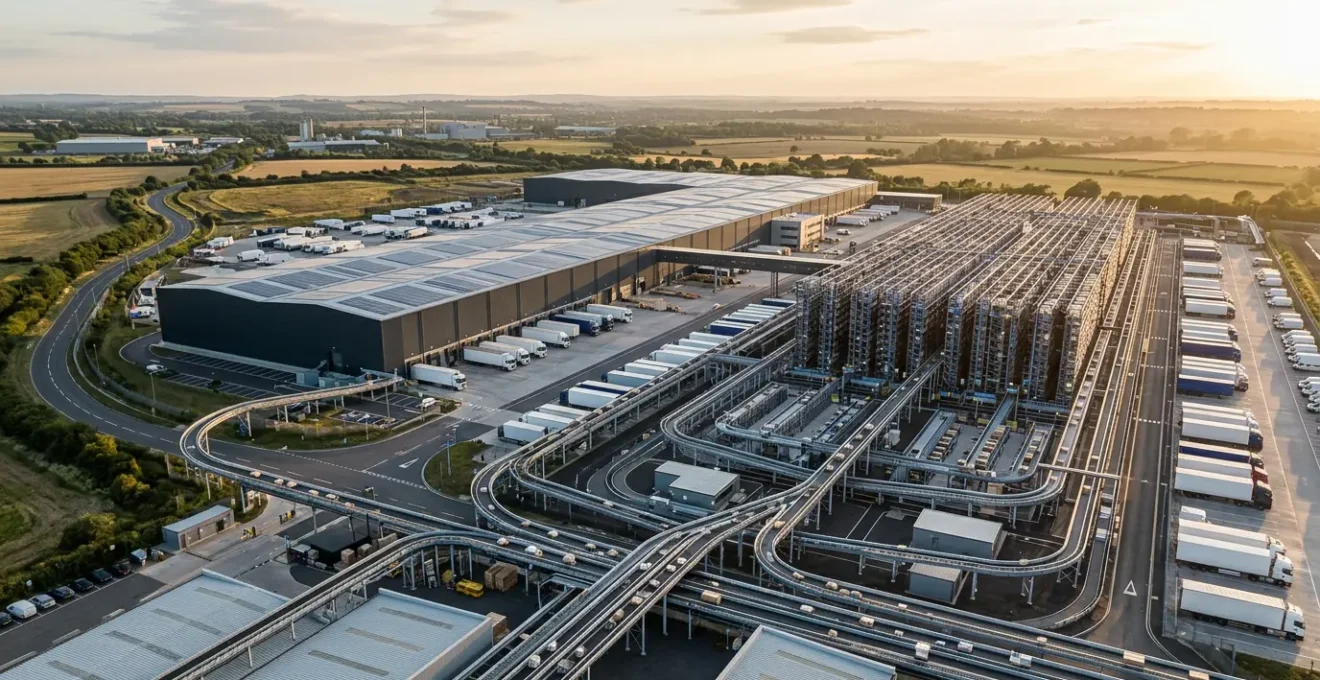
Stop viewing large-scale CAPEX as a debt-fueled crisis; it’s a powerful, self-funding tax asset waiting to be unlocked.
- The UK’s Full Expensing scheme allows you to deduct 100% of qualifying new machinery costs from your profits in year one.
- Asset finance and sale-and-leaseback models preserve your working capital and strengthen your balance sheet, unlike traditional bank loans.
Recommendation: The key isn’t choosing a single financing option, but sequencing tax reliefs and asset finance into a cohesive roadmap that turns a cost centre into a competitive advantage.
For any logistics or manufacturing director, the prospect of a large-scale capital expenditure project is daunting. You see the ageing conveyor systems, the inefficient picking processes, and the mounting costs of manual labour, and you know an upgrade is critical. Yet, the thought of taking on massive, high-interest debt to fund it feels like a crippling blow to the balance sheet, a risk many are unwilling to take in a volatile economic climate.
The common advice is to simply « compare financing options » or « build a good business case. » This approach misses the strategic depth required. It frames the decision as a necessary evil, a cost to be minimised. But what if this entire perspective is flawed? What if the CAPEX project itself contained the seeds of its own funding? The true key lies not in finding the cheapest loan, but in architecting a sophisticated, tax-efficient roadmap that leverages UK-specific financial instruments.
This isn’t about simply buying equipment; it’s about transforming a dreaded liability into a strategic advantage. The most astute financial planning treats CAPEX not as a single transaction but as a multi-stage project where tax reliefs, operational gains, and intelligent financing work in concert. By doing so, you can fortify the balance sheet, boost productivity, and fund a major infrastructure upgrade without being beholden to the banks.
This guide will walk you through that strategic roadmap. We will deconstruct the powerful tax levers available, evaluate modern financing vehicles that preserve your cash flow, and demonstrate how to build a self-funding plan for your next major capital investment, turning fear of debt into a clear path for growth.
Summary: A Strategic Roadmap for Debt-Free CAPEX in UK Warehousing
- When to Purchase Heavy Machinery Instead of Relying on Long-Term Rentals?
- How to Claim the Annual Investment Allowance on Your £200,000 Factory Upgrade?
- The Depreciation Miscalculation That Skews Your Year-End Corporation Tax Bill
- Bank Loans vs Asset Finance: Which Funds Your Next Major Capital Expenditure?
- Why Delaying Critical Tech CAPEX Costs Logistics Firms £10,000 Monthly?
- Maximising Tax Relief on Software Reinvestments Under New HMRC Guidelines
- Just-in-Time Inventory vs Bulk Purchasing: Which Optimises Your Capital Turnover?
- Conducting a Painless Internal Auditing Process for Mid-Sized Tech Firms Before Series B
When to Purchase Heavy Machinery Instead of Relying on Long-Term Rentals?
The classic « buy vs. rent » dilemma for heavy machinery is no longer a simple calculation of monthly payments. In today’s logistics landscape, it’s a strategic decision that shapes your operational agility, financial structure, and even your ESG profile. Rental offers flexibility for seasonal peaks, but long-term reliance on it for core operations is often a false economy. It means you’re perpetually paying for an asset you’ll never own, missing out on significant tax advantages, and remaining dependent on a third party’s fleet and availability.
Purchasing, on the other hand, anchors the asset on your balance sheet and, more importantly, unlocks powerful tax incentives. The decision hinges on utilisation. If a piece of equipment is fundamental to your daily operations and will be used consistently for years, purchasing is almost always the superior long-term financial strategy. The growth of the UK warehouse automation market, projected to reach a value of £5.6 billion by 2034, signals a clear trend towards ownership of these strategic assets.
The rise of hybrid models like Robotics-as-a-Service (RaaS), where you pay per pick, offers a middle ground. However, for core infrastructure like conveyor systems or automated racking, the decision to purchase is a commitment to operational independence and long-term value creation. The evaluation must transcend a simple cost comparison to encompass tax benefits, labour retention, and the strategic value of controlling your own core technology stack.
How to Claim the Annual Investment Allowance on Your £200,000 Factory Upgrade?
The UK government provides powerful incentives to encourage capital investment, and understanding them is the first step in creating a debt-averse funding strategy. For many, the Annual Investment Allowance (AIA) is the most familiar tool. It allows a business to deduct the full value of qualifying plant and machinery, up to a certain limit (currently £1 million), from its profits before tax. For a £200,000 factory upgrade, this means you could potentially reduce your taxable profits by the full £200,000 in the year of purchase.
However, for investments in new (not second-hand) main rate plant and machinery, a more powerful tool now exists: Full Expensing. This temporary measure, made permanent in 2023, allows companies to claim a 100% first-year allowance for qualifying assets with no upper limit. A company investing £1.5m in new machinery can deduct the entire £1.5m in that tax year, generating a £375,000 tax saving (at a 25% Corporation Tax rate). This isn’t a deferral; it’s an immediate and significant cash injection back into your business that can be used to fund the next stage of your upgrade.
Knowing what qualifies is critical. The rules are specific, but for a warehouse context, many essential items are covered. This visual guide helps clarify what’s typically included:

Generally, qualifying assets include essential operational equipment. A clear list of examples includes:
- Qualifying: Conveyor systems, automated racking, forklift trucks, pallet trucks, and shelving.
- Qualifying: Fire alarm and security systems in non-residential property.
- Non-qualifying: The building’s structure itself, such as walls or foundations.
Crucially, capital allowances can also be claimed for equipment acquired through hire purchase agreements, blending tax efficiency with financing strategy. This makes it possible to structure a deal where the tax relief from the first year effectively covers a significant portion of the initial financing cost.
The Depreciation Miscalculation That Skews Your Year-End Corporation Tax Bill
The single biggest mistake in CAPEX planning is treating tax allowances and accounting depreciation as the same thing. They are fundamentally different, and confusing them can lead to a dangerously inaccurate view of your company’s tax liability and cash flow. Accounting depreciation (e.g., straight-line over 5 years) is an accounting concept designed to spread the cost of an asset over its useful life for the profit and loss statement. It gives a smooth, predictable view of asset costs.
Capital allowances, especially Full Expensing, are a tax concept designed to incentivise investment. They create a deliberate and highly beneficial mismatch between your accounting profit and your taxable profit. By allowing a 100% deduction in year one, Full Expensing dramatically reduces your Corporation Tax bill upfront, providing a significant cash flow advantage. The value of this is immense; analysis from the Tax Foundation shows that permanent Full Expensing provides a 100% net present value deduction for investment, far superior to the 75.8% provided by the pre-2021 system.
This front-loading of tax relief is the cornerstone of a self-funding roadmap. The cash saved from the reduced tax bill in year one becomes available capital to fund further investment or service the financing used for the initial purchase. However, this comes with a critical caveat regarding asset disposal. As tax specialists from PwC UK highlight, the tax relief must be accounted for upon sale.
A business incurs expenditure of £1 million in 2023, and claims full expensing. If it then disposes of those assets for £500,000 in 2024, those proceeds received will be taxed in the period.
– PwC UK Tax Specialists, Full expensing – a new and valuable capital allowance
This « balancing charge » ensures the system is fair. You receive the full benefit upfront but must repay the corresponding relief if you sell the asset. This is a crucial detail for your long-term financial model, ensuring there are no surprises when assets are eventually replaced.
Bank Loans vs Asset Finance: Which Funds Your Next Major Capital Expenditure?
Once you’ve decided to purchase, the default option for many is a traditional bank loan. However, for a director terrified of debt, this is often the worst choice. A bank loan increases your liabilities on the balance sheet, can impact your debt-to-equity ratios, and may even breach existing banking covenants. It provides the cash, but at a significant cost to your financial flexibility and risk profile. Asset finance, by contrast, is a suite of tools designed specifically for acquiring equipment and works in harmony with a tax-efficient strategy.
The core principle of asset finance (including hire purchase and finance leases) is that the asset itself provides the security for the funding. This often means less strain on your other business assets and more favourable terms. For instance, CPG Logistics opted for a leasing solution for their warehouse refit to maintain cash flow flexibility, spreading the cost of everything from racking to IT equipment over time. This preserves precious working capital for day-to-day operations rather than tying it up in fixed assets.
An even more powerful tool for a company with existing assets is a Sale-and-Leaseback agreement. This involves selling an asset you already own (like a fleet of forklifts) to a finance company and immediately leasing it back. This injects a lump sum of cash directly into your business—capital that can be used to fund your new upgrade project—while you continue to use the asset. It’s a masterful way to unlock the value trapped in your balance sheet without taking on new debt.
The strategic differences are stark, as this comparison shows:
| Financing Method | Impact on Balance Sheet | Cash Flow Timing | Banking Covenants Effect |
|---|---|---|---|
| Sale-and-Leaseback | Removes asset, improves ROA | Immediate lump sum | Preserves debt-to-equity ratios |
| Bank Loan | Increases debt liability | Immediate funding | May breach existing covenants |
| Asset Finance | May be off-balance sheet | Preserves working capital | Minimal covenant impact |
The right choice depends on your specific situation, but for a debt-averse strategy, asset finance and leasing options provide a level of flexibility and balance sheet protection that a simple bank loan cannot match.
Why Delaying Critical Tech CAPEX Costs Logistics Firms £10,000 Monthly?
The fear of debt can lead to the most expensive decision of all: inaction. Delaying critical technology upgrades is not a « no-cost » option. It’s a decision that incurs significant, ongoing, and often hidden costs that bleed cash from the business every single month. These costs manifest in labour inefficiencies, higher error rates, lost customer goodwill, and the inability to compete for contracts that demand modern logistical capabilities.
The most direct cost is labour. With rising wages, relying on manual processes for tasks that could be automated is a huge financial drain. A clear ROI calculation demonstrates this starkly: with the UK’s National Living Wage at £11.44 per hour, replacing just a few manual roles with Automated Guided Vehicles (AGVs) can generate huge savings. A recent analysis for UK operators found an AGV implementation could yield a net annual saving of £276,000, with a payback period of just approximately 2.2 years. Every month of delay is a month where that saving is not realised.
Beyond direct labour, the cost of errors in a manual system is substantial. This includes the cost of incorrect picks, returns processing, and reputational damage. The impact of automation is staggering. Well-implemented systems can achieve a 99.9% reduction in picking errors and a 300% increase in fulfilment speed in high-volume facilities. These aren’t marginal gains; they are transformative improvements that directly impact the bottom line and customer satisfaction. The longer you wait, the further you fall behind competitors who have already made the leap and are reaping these benefits.
Framing the decision this way is crucial. It’s not « Can we afford to invest £1 million in automation? » but rather « Can we afford to keep losing £10,000, £20,000, or more every month due to inefficiency? » The investment stops looking like a cost and starts looking like the solution to a bleeding wound on your P&L statement.
Maximising Tax Relief on Software Reinvestments Under New HMRC Guidelines
Warehouse upgrades are no longer just about steel racking and forklifts; they are deeply integrated technology projects. Warehouse Management Systems (WMS), Transport Management Systems (TMS), and the bespoke software that ties them together are critical capital expenditures. The good news is that under the latest HMRC guidelines, these intangible investments can also attract significant tax relief, but the rules require careful navigation.
The Full Expensing regime is a game-changer here. Previously, software was often treated under different, less generous capital allowance pools. Now, the guidance is much clearer. As highlighted by tax experts from PwC, the path to a 100% deduction is open for software investments.
Where a company incurs capital expenditure on assets that would otherwise qualify for the main pool (including IT equipment and capital investment on software) it is entitled to claim a first year allowance and take a 100% in year deduction. Where such expenditure is capitalised as an intangible asset, elections may be required to permit such a claim.
– PwC UK Capital Allowances Team, Full expensing – capital allowance guidance
This is a crucial point: you may need to make a formal election to treat the intangible software asset as if it were tangible plant and machinery to access the 100% relief. This is a procedural step that your accountant must get right. The choice between a perpetual software license (treated as CAPEX) versus a SaaS subscription (treated as an operational expense, or OPEX) also has major tax implications that must be modelled.
Furthermore, your software investment may qualify for even more generous relief. If the project involves developing new processes or significantly customising existing software to overcome a specific technological uncertainty, the costs may qualify for R&D Tax Credits. This is a separate, highly valuable relief scheme. For truly novel logistics software, you might even be able to benefit from the Patent Box regime, which can reduce the tax on profits from that innovation to just 10%. A comprehensive software investment strategy should therefore evaluate all these avenues to ensure every available pound of tax relief is claimed.
Just-in-Time Inventory vs Bulk Purchasing: Which Optimises Your Capital Turnover?
Your capital expenditure on warehousing is intrinsically linked to your inventory strategy. The choice between a Just-in-Time (JIT) model and a bulk purchasing approach directly impacts the type and scale of warehouse infrastructure you need, and therefore your CAPEX requirements. This isn’t just an operational choice; it’s a fundamental financial one that dictates how efficiently your capital is turned over.
The relentless growth of e-commerce, with the UK logistics sector now processing over 4.4 billion online orders annually, has put immense pressure on both strategies. A traditional bulk purchasing strategy requires significant upfront working capital to buy inventory and large-scale storage CAPEX for the warehousing space itself. The benefit is price discounts on goods, but the cost is slow capital turnover and high exposure to inventory obsolescence.
A JIT strategy, in contrast, aims to minimise inventory holding. This reduces the need for working capital and physical storage space, thus lowering your storage CAPEX. However, it demands a much higher investment in technology CAPEX. To operate effectively, JIT requires sophisticated visibility systems—WMS, forecasting software, and real-time tracking—to prevent stock-outs. The capital is shifted from physical space to digital infrastructure. A hybrid ‘Just-in-Case’ model has emerged as a popular compromise, holding slightly more buffer stock to guard against supply chain disruptions.
The financing options for each strategy also differ, highlighting how your inventory model dictates your funding plan.
| Strategy | Storage CAPEX | Tech CAPEX | Working Capital Need | Financing Options |
|---|---|---|---|---|
| Just-in-Time | Lower (reduced space) | Higher (visibility systems) | Lower | Tech leasing/RaaS |
| Bulk Purchasing | Higher (more storage) | Lower (basic systems) | Higher | Inventory finance available |
| Hybrid ‘Just-in-Case’ | Medium | Medium | Medium | Mixed financing model |
Ultimately, your CAPEX plan cannot be developed in a vacuum. It must be a direct reflection of your chosen inventory and working capital strategy. Aligning these two elements is critical to building a facility that is not just modern, but also financially optimised for your specific business model.
Key takeaways
- The UK’s Full Expensing and Annual Investment Allowance are not just tax rules; they are powerful funding mechanisms that can inject cash back into your business.
- Asset finance, leasing, and sale-and-leaseback are superior to bank loans for preserving working capital and strengthening the balance sheet during a major upgrade.
- The cost of delaying critical tech and automation upgrades is a real, measurable monthly cash drain that often far exceeds the cost of financing the solution.
Conducting a Painless Internal Auditing Process for Mid-Sized Tech Firms Before Series B
While the title suggests a tech-firm focus, the principle of a « painless internal audit » is universally critical before seeking any major funding or board approval for CAPEX. For a logistics director, this translates into a CAPEX-Readiness Assessment. This isn’t about ticking boxes for an external investor; it’s about building an unshakeable internal case that makes the funding decision—whether from the board, a bank, or a finance partner—a logical formality rather than a gruelling battle.
Your goal is to anticipate and answer every question before it’s asked. You need to move beyond a simple « we need a new conveyor » to a fully costed, data-backed strategic proposal. This audit proves you have done your homework and de-risked the project for the decision-makers. The global warehouse automation market is growing at a staggering rate, with a projected Compound Annual Growth Rate (CAGR) of over 15% from its 2023 valuation. A robust internal audit positions your company to capture a piece of this efficiency revolution.
The process involves stress-testing every aspect of your proposal. Have you quantified the ROI projections with conservative assumptions? Have you documented the poor condition and high maintenance costs of existing assets to justify their replacement? Have you aligned the project’s goals with the company’s wider strategic objectives, including ESG targets? A thorough audit ensures your project is not just operationally sound but also financially and strategically compelling.
This proactive due diligence transforms the conversation from one of cost and risk to one of opportunity and return. It demonstrates fiscal responsibility and strategic foresight, making you a trusted steward of the company’s capital.
Action Plan: Your CAPEX-Readiness Assessment Checklist
- Validate the Business Case: Document everything with quantified efficiency gains (e.g., reduced labour cost per unit picked) and clear ROI projections.
- Document Asset Condition: Compile a full inventory of existing assets, including their age, condition, and detailed maintenance records to justify replacement for asset finance partners.
- Prove Strategic & ESG Alignment: Create a short document explicitly linking the upgrade to the company’s 3-year strategic plan and its environmental, social, and governance goals.
- Complete Tech & Cyber Due Diligence: Get written confirmation from your IT team or a consultant that the new systems are secure, scalable, and integrate with existing enterprise software.
- Verify Legal & Data Compliance: Ensure all new systems that handle personal data are fully compliant with GDPR and UK data laws, obtaining written verification from suppliers.
By systematically applying this roadmap—leveraging tax allowances, choosing smart finance, and building an irrefutable business case—you can pilot your firm’s next major infrastructure upgrade, delivering transformative results without burying the company in high-risk debt. The path to a modern, efficient warehouse is not paved with loans, but with strategic financial architecture.